
Prebiotics vs Probiotics: What’s the Difference and Why Your Gut Needs Both

Your gut does far more than digest food.
It influences your energy, your skin, your immune resilience, and even your mood. Yet for something so central to how you feel day to day, gut health is one of the most overlooked pillars of overall wellbeing. One of the most important (and often misunderstood) ways to support it comes down to two key elements: prebiotics and probiotics. While they are frequently mentioned in the same breath, understanding the difference between them and how they work in combination is essential to building a healthy, well-balanced gut.
What Are Probiotics?
Probiotics are live beneficial bacteria that support the natural balance of microorganisms in your digestive system.
They help to:
- maintain gut flora balance
- support digestion and nutrient absorption
- contribute to immune system function
These beneficial bacteria can be introduced through fermented foods such as yogurt, kefir, kimchi, sauerkraut, and miso. They can also be taken in supplement form, making it easier to support your gut consistently especially when your diet doesn’t always include enough fermented foods.
By replenishing the gut with good bacteria, probiotics play a key role in supporting digestive health and overall wellbeing. Think of them as reinforcements arriving to help maintain order in a complex ecosystem. They don’t replace what’s already there; they work alongside it.
What Are Prebiotics?
Prebiotics are types of dietary fibre that act as nourishment for the beneficial bacteria already living in your gut.
Unlike probiotics, prebiotics are not bacteria themselves. Instead, they help existing bacteria grow, multiply, and remain active. Without them, even the most robust probiotic supplement is working against the odds the good bacteria simply don’t have the fuel they need to thrive.
Common sources of prebiotics include:
- garlic and onions
- oats
- legumes such as lentils and chickpeas
- slightly green bananas
- asparagus and leeks
- Jerusalem artichoke
Most of these foods are everyday staples, which is good news. But modern diets (high in processed foods, low in plant diversity often fall short of delivering enough prebiotic fibre consistently. This is one of the most common reasons gut health suffers even when people feel like they’re eating reasonably well.
Without adequate prebiotic intake, beneficial bacteria struggle to survive long term. You can introduce all the probiotics you like, but if there’s nothing to sustain them, their impact will be limited.
The Prebiotics vs Probiotics Question Do You Need Both?
This is one of the most common questions in the gut health space, and the short answer is yes.
When people search for information on prebiotics vs probiotics, they’re often looking for a simple answer: which one should I take? The reality is that framing them as competing options misses the point entirely. They serve different functions, and those functions are deeply interconnected.
Probiotics introduce and replenish beneficial bacteria. Prebiotics provide the environment and fuel those bacteria need to do their job. One without the other is a little like hiring a team and then not providing them with the tools or resources to work effectively. The bacteria are there, but they’re not in a position to perform.
For gut health that actually holds up over time, you need both sides of the equation working together.
Why Your Gut Needs Both
Your gut microbiome relies on balance.
Research shows that the gut is home to trillions of microbes that influence digestion, metabolism, immune function, and even skin health. This community of microorganisms is sometimes referred to as your microbiome, and its diversity and stability matter enormously to how you feel.
When this balance is disrupted a condition often referred to as dysbiosis it may lead to:
- bloating and digestive discomfort
- fatigue and low energy
- brain fog
- increased skin concerns
- irregular bowel habits
- a sense of sluggishness that doesn’t resolve with sleep
Dysbiosis can be triggered by a range of factors: prolonged stress, antibiotic use, a diet low in fibre, illness, or simply the cumulative effect of years of inconsistent eating habits. Many people don’t realise their gut is out of balance until they start addressing it and notice how much better they feel.
Prebiotics and probiotics work together to restore and support that balance. Probiotics introduce beneficial bacteria; prebiotics nourish and sustain them. They are not competing forces they are complementary ones. Together, they form the foundation of a healthy gut microbiome and, by extension, a more stable foundation for your overall wellbeing.
How to Support Your Gut Every Day
The good news is that supporting your gut doesn’t require a complete dietary overhaul. Small, consistent habits tend to compound over time and when you understand what prebiotics and probiotics each need from you, it becomes a lot easier to give your gut what it’s actually asking for.
Prebiotics: focus on food
Prebiotics are one area where food genuinely is your best source. The diversity of fibre found across whole plant foods is difficult to replicate in supplement form, which is why building prebiotic intake through your diet is both practical and effective.
Focusing on variety makes the biggest difference here. Eating a wider range of plant foods across vegetables, fruits, legumes, wholegrains, nuts, and seeds increases the diversity of prebiotic fibre you’re consuming, which in turn supports a more diverse and resilient microbiome. Many gut health researchers now point to 30 different plant foods per week as a meaningful benchmark, and it’s more achievable than it sounds once you start counting.
Garlic, onions, leeks, asparagus, oats, lentils, chickpeas, and slightly green bananas are all reliable prebiotic sources you can build into everyday meals without much effort.
Probiotics: food plus targeted supplementation
On the probiotic side, fermented foods like yogurt, kefir, kimchi, and sauerkraut are a useful starting point. They introduce beneficial bacteria into the gut and are worth including regularly if your diet allows for it.
That said, the strains found in everyday fermented foods are not always the same as those that have been studied for specific gut health benefits. This is where a quality probiotic supplement can offer something meaningfully different.
The INTU Wellness Gut & Skin Rejuvenation blend contains probiotics beneficial microorganisms that enhance gut health at 2 billion CFU each of two well-researched strains: Bifidobacterium animalis ssp lactis and Lactobacillus rhamnosus. Together, these strains support digestion, immune function, GIT motility, and nutrient absorption, and may help improve gas-induced abdominal distension. Bifidobacterium animalis ssp lactis in particular supports digestive health and is commonly used to help alleviate symptoms of irritable bowel syndrome.
Pair it with a fibre-rich, plant-diverse diet to give those beneficial bacteria the prebiotic foundation they need to thrive.
The Bottom Line
Prebiotics and probiotics each have a distinct and important role to play in gut health. The question isn’t which one you should prioritise it’s how to make sure you’re getting enough of both.
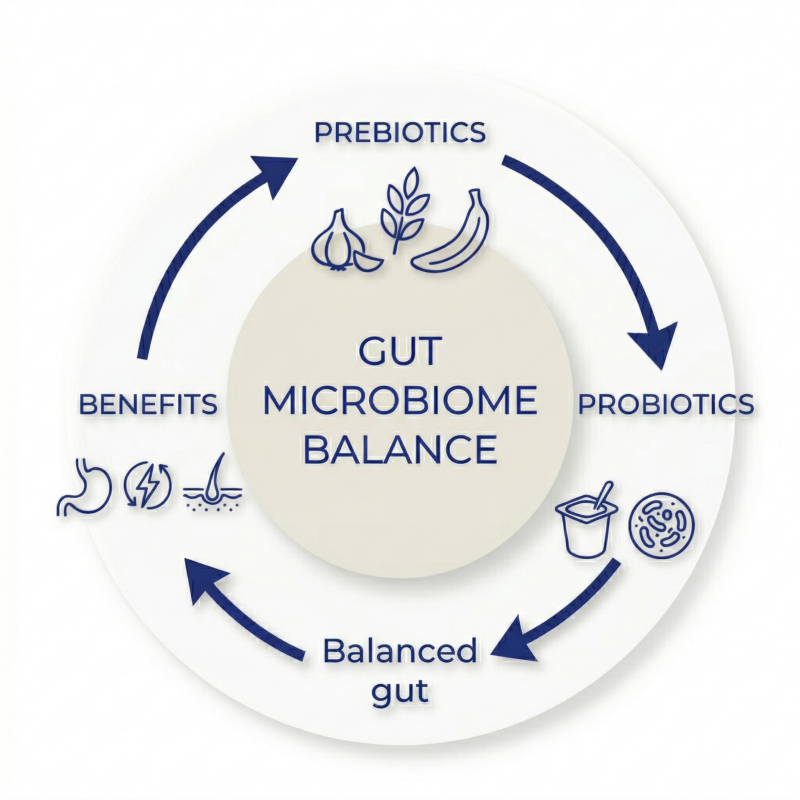
A diverse, plant-rich diet lays the prebiotic foundation. Fermented foods and quality probiotic supplements provide the beneficial bacteria. Together, they support a gut microbiome that can do what it’s designed to do: keep you feeling balanced, energised, and well.
Your gut is always working for you. The more you support it, the more it gives back.